
Quarter Turn Monday#4
The Purpose Pause: Start with Why

Last week, we focused on Presuming Competence. This week, we’re thinking about how to build belonging by focusing on the purpose of routines, activities, and interactions.
The Story:
A big part of our work with teams involves their questions about how to support children. We often hear questions like: How do we get this child to try new things?; How do we teach her to sit at circle time with their peers?; or How do we get them to wait in the hallway after bathroom time with the rest of our group?
If you’ve considered questions like this or engaged in problem-solving around how to support a child, you’re our kind of people!
You’re reflective, curious and here for kids, and today’s quarter-turn is going to make all of this so much easier for you.
When we think about these “How to” (or “do” 😉) questions, here at C2C (i.e., Challenging to Connected), we find ourselves wondering about some other things like:
What does the child like to do?
What meaningful choices are available to them?
How have you supported children to understand the routine, activity, or agreements?
Questions like these are important, and of course there are others we think about. You probably have some favorites, too.
What we’re learning is that “what” and “how to” questions are most helpful when they come later in the planning and problem-solving processes.
In our work, we help teams begin with questions about the purpose of the routine, activity, interaction, agreement, or whatever else we’re considering. Starting with the purpose grounds everything else in belonging and in the experiences and learning opportunities we want children and adults to have together.
The Quarter Turn: Start with Why (Thank you, Simon Simek)
Through his work in the business and leadership world, author and speaker Simon Simek coined the phrase “Start with Why”. Our work isn’t about sales or marketing, but the heart of Sinek’s Golden Circle still applies to so much of what we do.
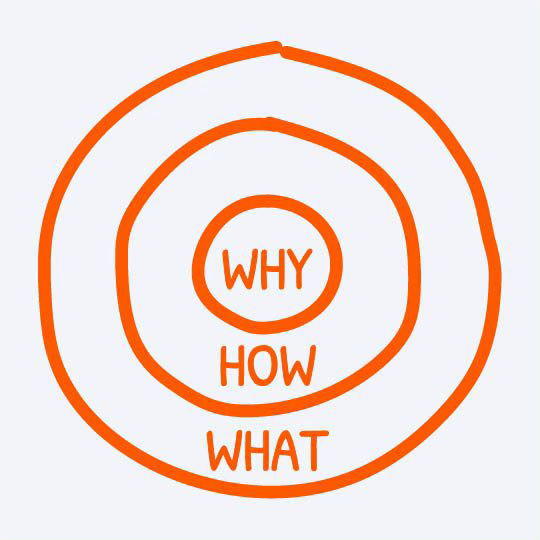
Before we start deciding on and planning strategies, we can pause and think about the reason behind what we’re doing.
Why do we do this routine?
What do we want children to learn or experience while they participate in this activity?
Purpose (or the “why”) helps us understand what a routine, activity, interaction, agreement, etc. is meant to offer children and adults. When we’re clear on that, the rest of our planning and problem solving makes a lot more sense.
Let’s think about the question: How do we get them to wait in the hallway after bathroom time with the rest of our group? Starting with our purpose, we can ask ourselves questions like:
What’s the purpose of our bathroom routine?
What’s the reason children wait in the hallway?
Could we do it another way?
In this example, maybe we realize that children wait in the hallway because that’s how we’ve always done it. Or, maybe they wait in the hallway because we need a certain adult-child ratio for safety. What we learn might lead us to a few more “why” questions. If the bathroom routine could happen a different way, we might ask something like … Do all of the children have to go down the hall to the bathroom together?
This quarter-turn, Start with Why, is all about intentionality. Knowing the purpose of routines, activities, interactions, and agreements gives us a decision-making map that aligns to our bigger goals for belonging and inclusive engagement.
How do we make the quarter-turn?
Being more purposeful is a work-in-progress kind of quarter-turn. All of us slip into auto-pilot in different parts of our lives. We’ve all had those moments of thinking, “How did I end up at the grocery store when I meant to go to the post office?”
Starting with Why is really just about pausing, considering the real purpose, and then planning or problem solving in a way that lines up with that intention. We often suggest that teams begin with one (routine, activity, interaction, agreement) and build from there, adding more over time. To do this with a routine, you can:
Choose a routine in your daily schedule. As a team, agree on the purpose of the routine. Consider what you want children to learn or practice. Reflect on what you hope children will experience (connection, peer interaction, joyful learning, etc.).
Intentionally plan toward your purpose. Once you’re clear about what you want children to learn, practice and experience, then start planning. Remember to consider what you know about the children in your community (what they like, their strengths, etc.) and plan the meaningful choices that support each child to be successful in the routine.
Let’s think back to the Bathroom Routine from above.
What is the purpose of the bathroom routine? Let’s be real. If the bathroom is down the hall from your classroom, the purpose is probably to avoid having an adult spend the entire day taking one child at a time to use the bathroom.
Intentionally plan toward your purpose. This is where we need to know the children and what works for them. If a whole-group bathroom routine with children waiting in the hallway works well, great. If it works better when children have something to do while they wait, like a song, a finger play, or a guessing game, you might keep going with what you’re doing.
If what you’re doing isn’t working for all children, before jumping to make it about one child or adding a lot of individualized supports that require a full adult’s attention, we can start with the purpose and think about a routine that could work for all children. This is the moment to pause and brainstorm other ways to meet your purpose.
Could the bathroom routine happen in small groups?
Could someone begin the next activity with children as they finish?
The possibilities depend on your program and your children. Thinking this way helps us stay grounded in purpose instead of automatically going to one-child solutions. And sometimes there will be individual supports, of course. We’ve just learned that once the routine works for everyone, we usually need a lot less of that than we thought.
The Part of the Turn That Really Matters
The secret power of knowing your purpose is the freedom it gives you to make flexible choices.
If the purpose of a circle time activity is to learn the social and emotional idea in the book, then standing at a table and listening becomes a real option for a child who listens better this way. The purpose isn’t to practice sitting criss-cross applesauce. It’s to connect with the story.
Starting with why helps us think outside of the preschool box, which means we can more easily build belonging by focusing on connection, meaningful choices, presuming competence, and communication.
Here’s to getting it right, not just getting it done,
Sally & Jackie